Topaz: imperial, yellow and pink
Topaz comes in many colours. The most sought after are imperial, a warm orange, golden yellow and pink, far from the treated blue topaz of everyday trade.
Maiwis editorial team
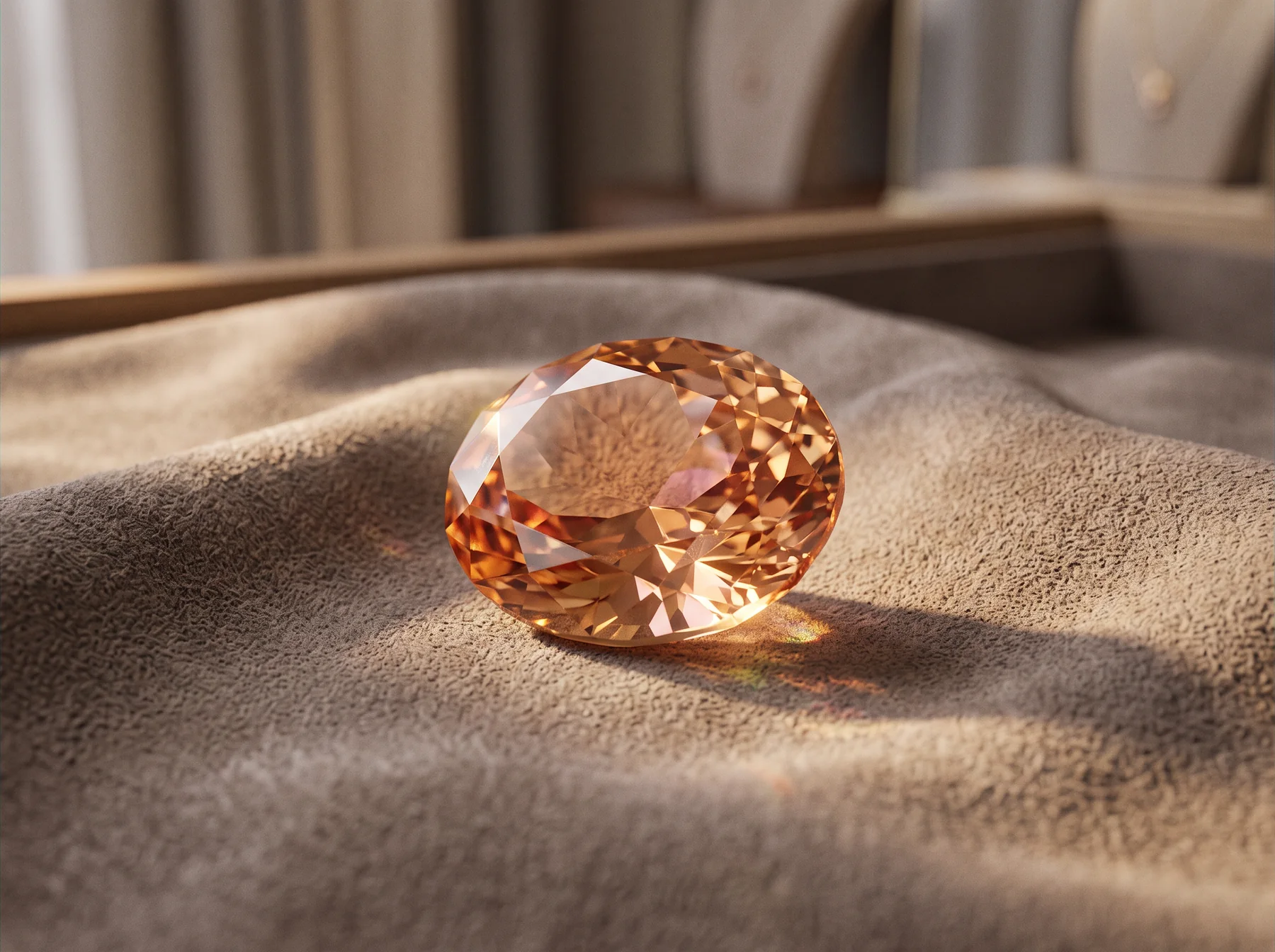
Imperial topaz
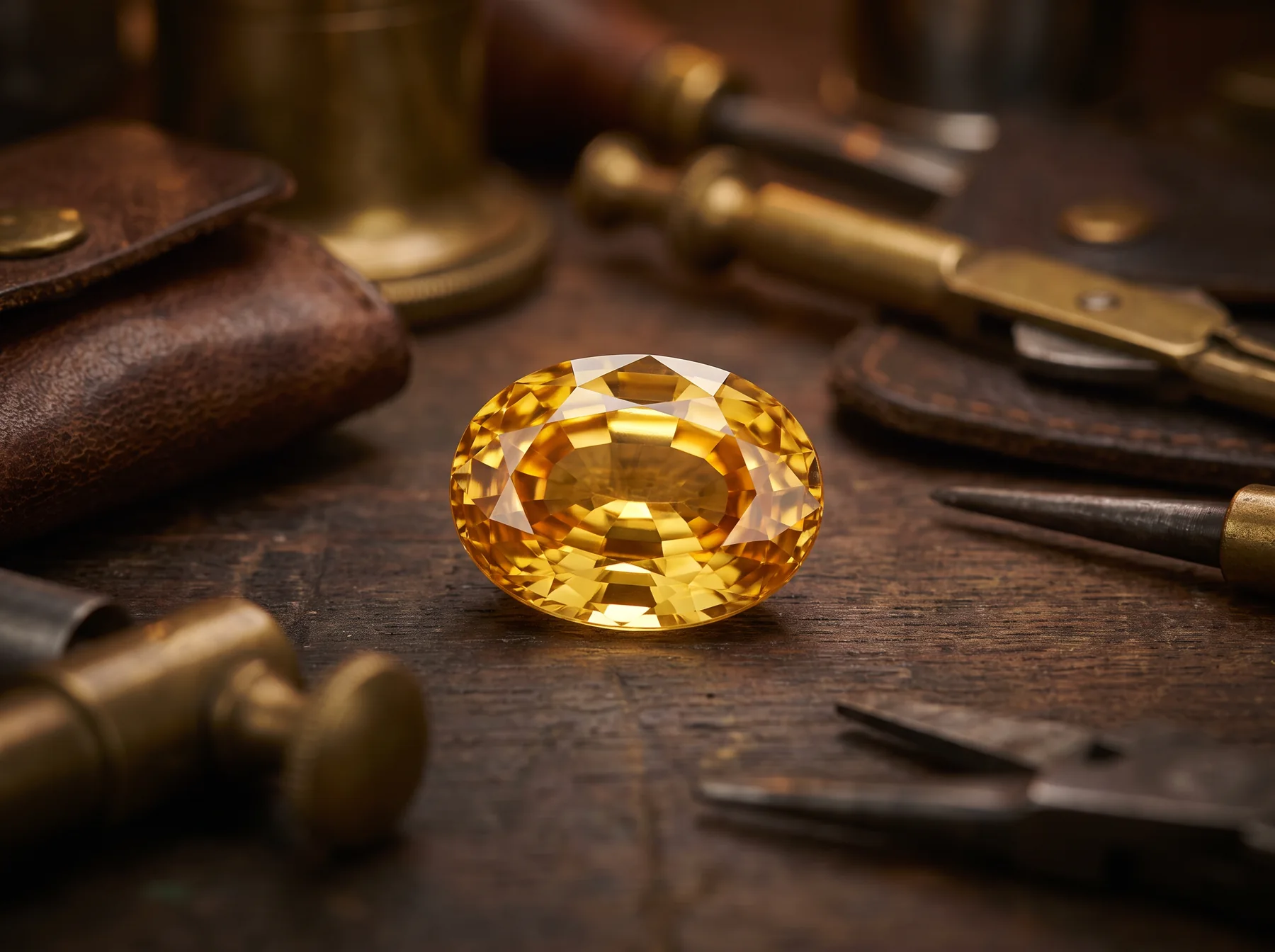
Imperial topaz is distinguished by its warm orange, which can lean towards gold, pink or red. The closer the shade gets to pink and red, the rarer the stone.
The origin of the name is the subject of two accounts. The first points to imperial Russia, where the pink topaz of the Urals was said to be reserved for the tsar’s family. The second mentions the Emperor of Brazil, in the 19th century. Both stories circulate, neither is established.
Yellow topaz
For centuries the word “topaz” first meant yellow stones. Yellow topaz runs from straw yellow to golden yellow, sometimes with a honey tinge. The finest, of a vivid, saturated golden yellow, are exceptional stones, harder and more brilliant than the citrines with which they are often confused.
Be wary of old trade names. Names such as “Madeira topaz” or “smoky topaz” long served to sell quartz, citrine or smoky quartz. Only the laboratory report says whether it is really a topaz.
What gives a topaz its value
| Criterion | What we look at |
|---|---|
| Colour | For imperial, a saturated orange, golden or pinkish. For yellow, a vivid golden yellow with no brown. |
| Saturation | A pure, luminous colour. Pale or brownish tones are worth markedly less. |
| Clarity | Topaz is often clean to the eye. We expect a stone with no visible inclusion. |
| Cut | Since the crystals are elongated, elongated oval or pear cuts are common, preserving the weight. |
| Weight | Fine imperial topaz above a few carats is rare. |
| Treatment | Untreated or heated, according to the report. |
The other topaz, and what to know
Natural pink topaz, notably from Pakistan, is rare and sought after.
Blue topaz is the most widespread in the trade. Its intense blues are almost always obtained by irradiating and then heating colourless topaz. This treatment is stable and legal, but it makes the stone an accessible one, unrelated to exceptional topaz.
Topaz with rainbow reflections, sometimes called “mystic”, is covered with a surface film. This coating must be disclosed, and it can wear off over time.
Origins
Brazil, in the state of Minas Gerais around Ouro Preto, is the main and historical source of imperial topaz and of fine yellow topaz. Russia, in the Urals, supplied famous topaz in the 19th century. Gem-quality topaz is also found in Pakistan, Sri Lanka, Burma, Nigeria and Madagascar, in varied colours. The origin of a specific stone is established by the laboratory.
Choosing a topaz
Look at the colour first: a luminous orange for imperial, a pure golden yellow for yellow. Check on the report the nature of the stone and any mention of heating. For a ring worn often, prefer a setting that protects the stone from knocks.
Topaz: the weight and cut you choose
The House does not hold a fixed stock. You describe what you are looking for, we search through our sources and present a short selection.
The weight
From a few tenths of a carat up to major collector pieces. Give us a range, for example 2 to 3 carats.
The cut
Oval, cushion, emerald cut, round, pear, heart, radiant or cabochon: the shape is chosen according to the jewel you will have made.
The colour
The shade, the intensity and the treatments you accept or exclude. The more precise the request, the faster the search.
As soon as a stone matches, we send you its photographs, a video, its laboratory report and its price, with no obligation. You then decide. The House supplies the exceptional stone; the jewel is made by the jeweller of your choice. Orders are taken worldwide, and stones can be viewed in person in Paris, by appointment.
Place an orderFrequently asked questions
Yellow topaz or citrine: what is the difference?
Citrine is a quartz, softer and far less expensive. Citrines were long sold under misleading names such as “Madeira topaz”. The laboratory report establishes the nature of the stone.
What distinguishes imperial topaz from yellow topaz?
Colour. Yellow topaz runs from straw yellow to golden yellow. Imperial adds an orange, pink or red note, rarer and more sought after.
Is blue topaz a rare stone?
Rarely. Natural blue topaz exists, but its blue is pale. The intense blues of the trade, such as “London blue” or “Swiss blue”, are obtained by irradiation and heating.
Is topaz suitable for a ring?
Yes, its hardness of 8 makes it resistant to scratches. It does have a marked cleavage, though: a sharp knock can split it. A protective setting is advisable.
Are imperial and yellow topaz treated?
Some orange imperial topaz is heated to obtain a pinker shade. Many yellow and imperial topaz remain untreated. The laboratory report says so.