Ruby
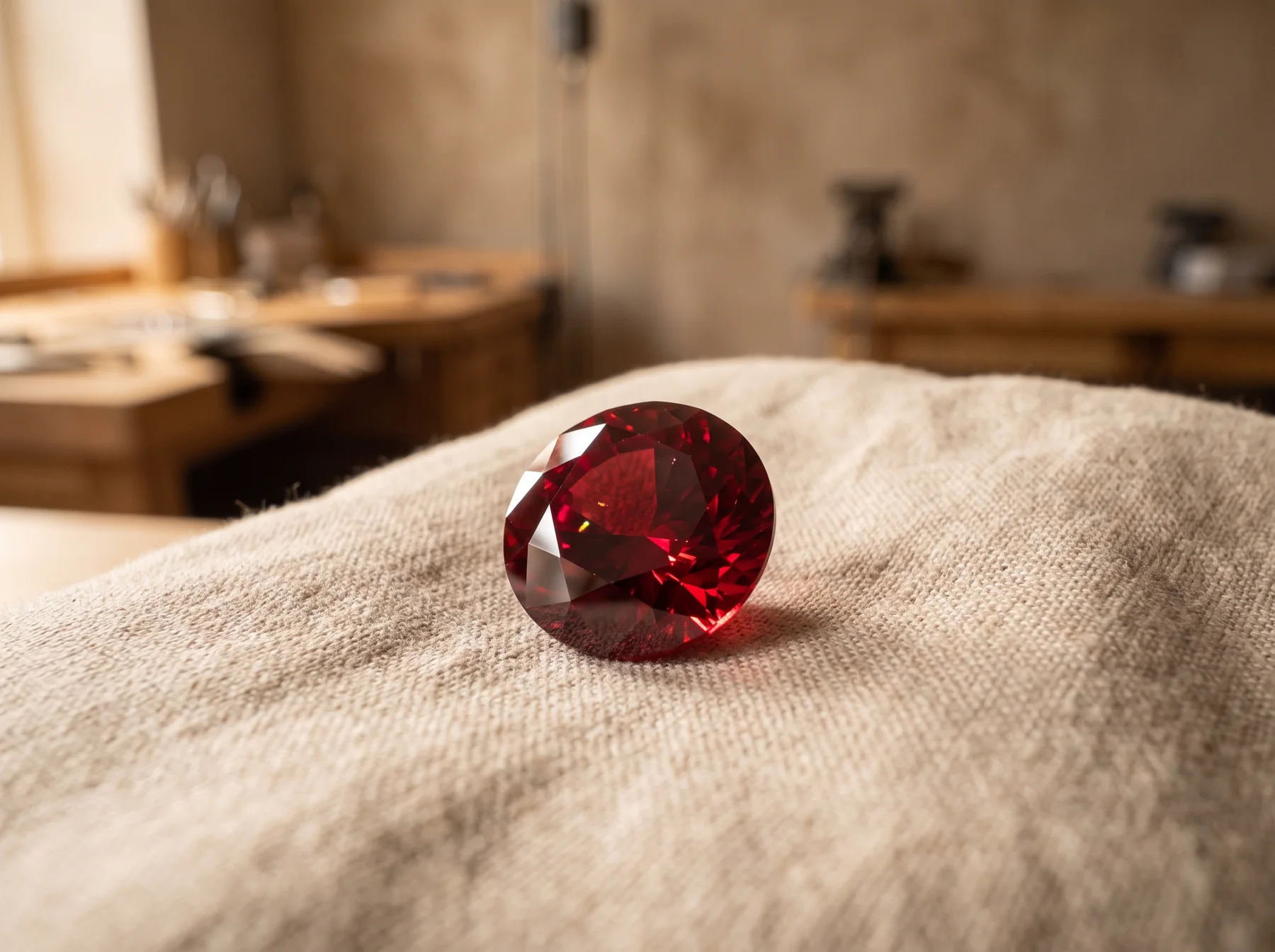
Ruby is red corundum. Fine stones above a few carats are among the rarest in jewellery, and their value is decided by small details of colour and treatment.
Maiwis editorial team
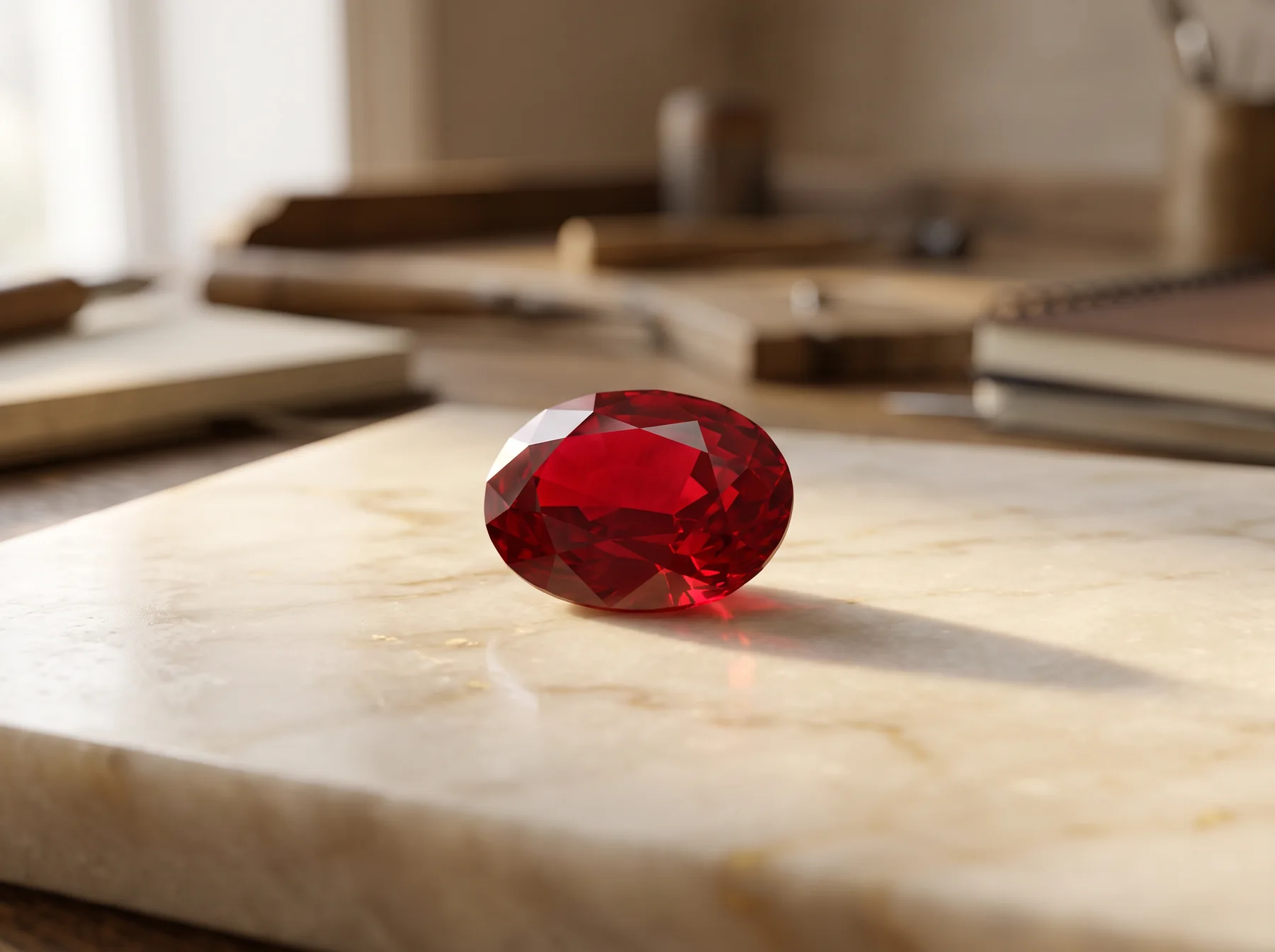
What gives a ruby its value
| Criterion | What we look at |
|---|---|
| Colour | A pure, saturated red. Shades that are too purplish or too brown are worth less. |
| Fluorescence | Chromium makes some rubies seem to glow in daylight, which adds to their brilliance. |
| Clarity | Rubies almost always contain inclusions. We look for a lively stone with no inclusion that bothers the eye. |
| Weight | Above 2 or 3 carats, fine-quality rubies become very rare. |
| Treatment | Unheated, heated, heated with residues or glass-filled. The report says which. |
| Origin | At equal quality, origin weighs on the value. |
Origins
The rubies of Burma, from the Mogok region, long served as the benchmark for their intense red. Since the discovery of the Montepuez deposits in 2009, Mozambique has become the leading source of jewellery-quality ruby.
Thailand produced the so-called “Siam” rubies, richer in iron and darker in red. Its deposits are little worked today. Rubies are also found in Madagascar, Tanzania and Vietnam.
Treatments
Most rubies are heated, which improves their colour and transparency. Heating can leave fine residues in the fissures, which the report mentions.
Lead-glass filling is of a different nature. It is used to fill major fractures in low-quality stones. The result is a composite material, sold at a fraction of the price of a ruby and which must be described as such. The report of a recognised laboratory lets you rule it out without hesitation.
Choosing a ruby
Colour comes before everything else. A slightly included ruby with a vivid, luminous red is often worth more than a cleaner stone with a dull red. For a stone above 2 carats, the report of a leading laboratory is a must, with the treatment and the origin stated.
Ruby: the weight and cut you choose
The House does not hold a fixed stock. You describe what you are looking for, we search through our sources and present a short selection.
The weight
From a few tenths of a carat up to major collector pieces. Give us a range, for example 2 to 3 carats.
The cut
Oval, cushion, emerald cut, round, pear, heart, radiant or cabochon: the shape is chosen according to the jewel you will have made.
The colour
The shade, the intensity and the treatments you accept or exclude. The more precise the request, the faster the search.
As soon as a stone matches, we send you its photographs, a video, its laboratory report and its price, with no obligation. You then decide. The House supplies the exceptional stone; the jewel is made by the jeweller of your choice. Orders are taken worldwide, and stones can be viewed in person in Paris, by appointment.
Place an orderFrequently asked questions
What does “pigeon blood” mean?
It is a trade name that some laboratories reserve for rubies of a very saturated, luminous red, according to their own criteria. It is not standardised from one laboratory to another.
Is a heated ruby worth less?
At equal quality, an unheated ruby is worth more, because it is rarer. Simple heating remains an accepted practice, provided it is disclosed.
What is the difference between a ruby and a pink sapphire?
It comes down to hue and saturation. The boundary between the two varies by laboratory and by country. The report states how the stone is designated.
Is ruby strong enough for a ring?
Yes. With a hardness of 9, ruby can be worn every day, like sapphire.